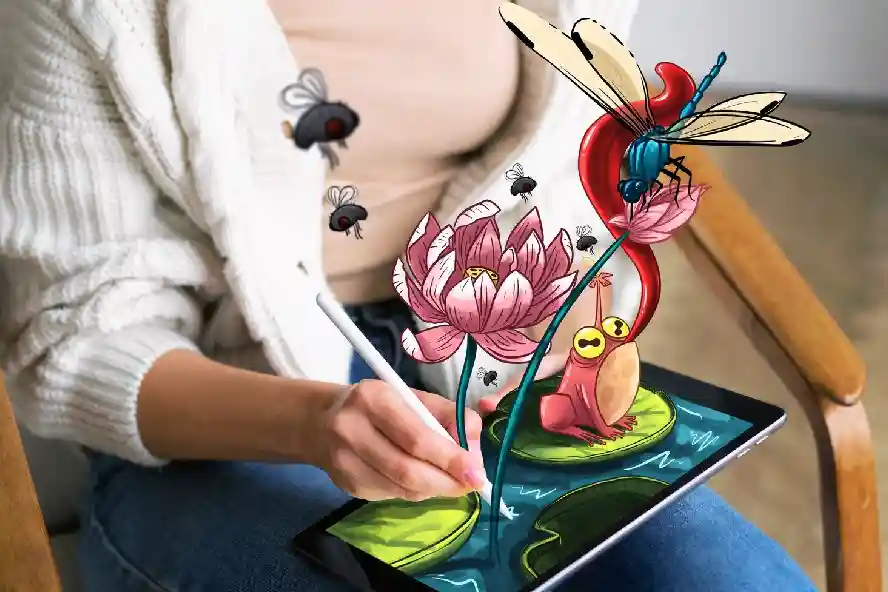
Artificial intelligence has revolutionised the way, we make and consume art in the digital age. AI techniques, have accelerated and simplified creativity from image generation to website design. However, while technology can create graphics quickly; it usually lacks emotional depth, context and narrative. This is where art direction comes in. Art direction guarantees, that every creative aspect, including colour, arrangement and tone, communicates a coherent message. In the age of AI, the goal is not to replace human creativity, but to guide it with aim and meaning.
- The Human TouchBehindVisual Storytelling
AI can copy styles but not vision. Art direction gives an emotional foundation, that robots simply cannot replicate. A skilled art director understands, how to elicit emotions through design choices which extends beyond statistics and analytics. They interpret the message, understand the audience, and transform it into visuals that are meaningful. This human sensitivity ensures that creative work feels true rather than artificial.
- Turning AI Tools into Creative Partners
Rather than seeing AI as competition; art directors are learning to use it as a collaborator. With tools like Midjourney, DALLE, and Adobe Firefly, they can experiment quickly, generate ideas and visualise concepts faster. However, without the guidance of an art director, AI results may appear generic or lack cohesion. Art direction ensures that these tools can be used to enhance creativity rather than replace it. Human direction meets technology accuracy to create magic.
- MaintainingBrand Consistency in a Digital World
In branding, consistency is essential. With innumerable graphics produced by AI, there is a risk of losing a brand’s distinct personality. Art direction preserves this consistency by establishing a creative vision that is consistent with the brand’s values, tone, and target audience expectations. Whether it’s an ad campaign, website design, or social media post, the art director ensures that each image and layout contributes to a cohesive story.
- Crafting Meaning in a Sea of Automation
AI can generate a limitless amount of content, but not all of it is meaningful. Art direction filters out noise; changing randomness into relevance. Art directors direct visuals, by understanding their context, purpose, and narrative. They determine what fits the message and what doesn’t. In an age of computerised art; meaning becomes the actual measure of creativity, and only human direction can offer it.
- The Future of Art Direction in AI Driven Creativity
The future of art direction is in the balance. AI will continue to evolve, as will the necessity for creative leaders who can incorporate human emotion, ethics, and strategy into the process. Art directors will serve as curators, creating concepts, managing algorithms, and ensuring creative integrity. In essence, they will ensure that technology supports rather than hinders creativity.
Wrapping Up
As artificial intelligence reshapes the creative landscape; art direction remains the driving force behind effective design. It mixes technology and emotion, guaranteeing that innovation is fundamentally human. While robots can produce art; the art director gives it meaning, direction, and soul.